Day 8 of 20 in the tzolkin

Lamat

rabbit / star

The morning star. The reason to keep going.

  • abundance
  • play
  • fertility
  • delight

Lamat is Venus and the rabbit at once — the morning star that announces dawn and the small, fast, multiplying creature that the Maya saw as a sign of plenty. The energy is delight without apology: art, music, flirtation, a garden in bloom, the particular kind of joy that produces more joy.

Born under Lamat, people are often easy to be around in a way they themselves underestimate. They scatter ideas, friends, projects — and a real number of them take root. The nawal can be scattered if it doesn't choose, but its scatter is a kind of fertility, not waste.

On a Lamat day, lean into pleasure as a working signal. What lights you up is information about where to put your energy next. The day favors making something beautiful, throwing a small celebration, planting bulbs you'll be glad about months from now.

A trecena opened by Lamat is generous. It tends to overflow — make sure you have somewhere to direct the abundance.
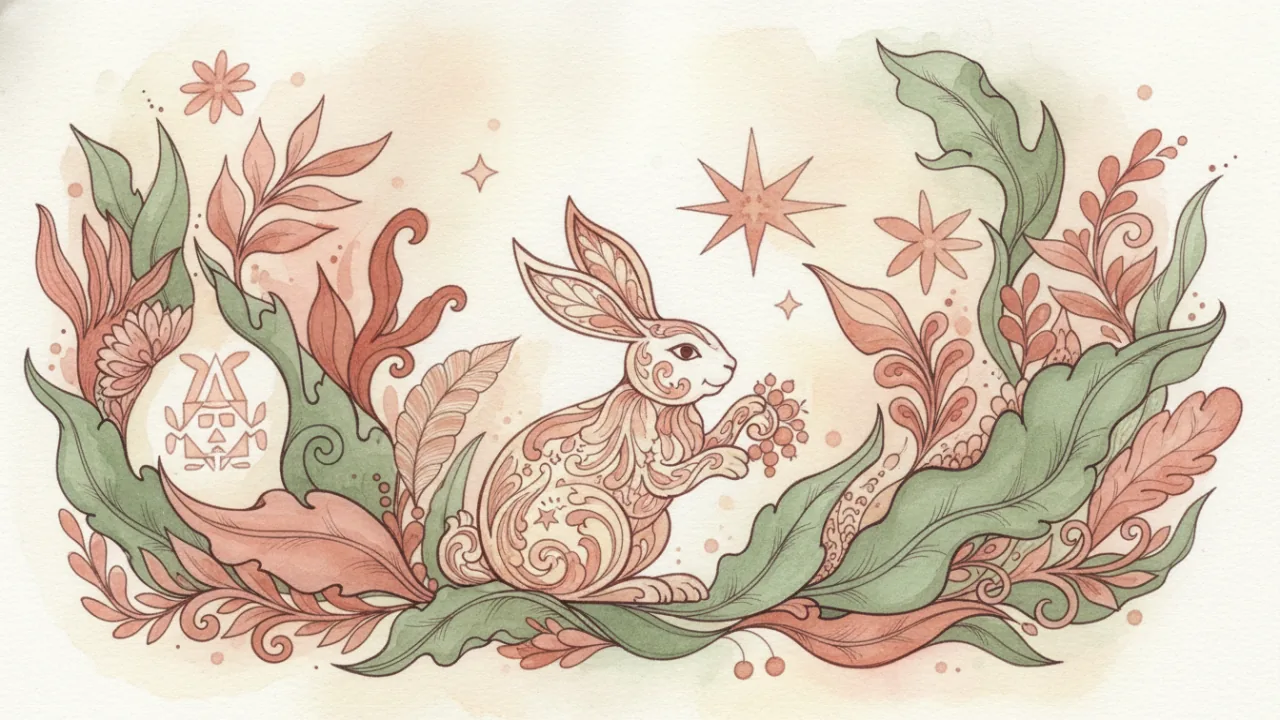
Watercolor scene evoking the energy of the Maya day sign Lamat

Cosmology and origins

Lamat carries the same glyph the Maya used to mark Venus, and that single fact pulls a long history into the room. Long before the Dresden Codex was carried out of Yucatán, scribes were tracking the planet's cycle with eerie precision — its 584-day round, its disappearances, its return as the morning star ahead of the sun. Lamat is the day-sign that holds that watching.

The rabbit sits beside Venus in the same nawal, and the pairing is not a footnote. In Maya thought, the rabbit is the lunar animal — the small creature glimpsed in the moon's face — and the multiplier of plenty. To put the morning star and the rabbit in one sign is to say: brightness above and abundance below belong to the same energy.

Highland Maya elders today still call this day a day for makers and for offerings of cacao, flowers, and song. The cosmology has not been frozen in a codex; it walks into kitchens and onto altars, into the way a grandmother arranges marigolds for a Lamat birthday.

As a birth-sign

Children born on a Lamat day are often described, in Maya tradition, as the ones the household orbits without realizing it. They draw company. They hand things out — snacks, jokes, small kindnesses — at a rate that quietly keeps a room fed. Their charisma is rarely the strutting kind; it is more like a window that has been left open.

As they grow up, Lamat people tend to discover that their pleasures are also their compass. The hobby they kept up despite being told it was unserious turns out to be the door to a vocation. The friend they couldn't stop calling becomes a chosen sibling. The garden they planted on a whim feeds the block. The nawal teaches its carriers to trust delight as a working signal, not a distraction from the real work.

There is a tender side: Lamat people can flinch at being called frivolous, because the world hasn't always known what to do with abundance that doesn't apologize. The healing is to remember that fertility is not optional ornament — it is how the calendar itself keeps going.

Day-energy in practice

On a Lamat day, the air feels a half-shade brighter, especially in the first hours after sunrise — fittingly, since the morning star is the sign's own face. Things that have been flat in your week regain a little color. Conversations have a flirt to them, even the practical ones. Markets and meals and small gatherings fall easily into place.

The recommended movement is generous. Send the message, share the recipe, throw the modest party, give the unsolicited compliment that turns out to land exactly where it was needed. Lamat days favor anything that multiplies — sourdough, seedlings, group chats, choirs — and they favor the human practice of feeding more people than strictly necessary.

The shadow of the day, if you push it, is overflow without a vessel. Lamat is willing to give and give, but if there is no jar, no pot, no garden bed waiting for the abundance, it scatters. Decide where the surplus is going before you let the day open the taps.

Practices and tradecraft

Traditional Lamat-day practice is unembarrassed about beauty. Cut flowers. Cook a meal that is more than utilitarian. Light a candle that smells like something. Wear the shirt you've been saving for a better day, on the theory that today is that day. The nawal does not respond to austerity; it responds to care made visible.

There are older offerings still in living use: cacao at the altar, a handful of seeds for the birds, a small dish of corn for the rabbit who will not appear but is honored anyway. Modern Lamat tradecraft can borrow this shape — make the offering small, make it sincere, make it something you would actually be glad to receive.

Make-and-share is the verb of the day. If you are a maker — and Lamat people often are — Lamat days are good for finishing the piece, photographing it, putting it where someone will see it. The energy reaches its full size only when the work circulates.

Tradeoffs and shadow side

Every nawal carries a shadow, and Lamat's is honest: scatter. The same fertile, magnetic energy that lets a Lamat person plant five gardens at once can leave them standing in a field of half-grown projects, none of them deep enough to harvest. Abundance without aim becomes a kind of hunger that more never satisfies.

There can also be a fear of disappointing people. Lamat is so practiced at delight that grief, anger, and refusal sometimes feel like betrayals of its own brightness. The nawal asks its carriers to learn that saying no is also a form of fertility — it protects the soil for what you actually want to grow.

Used well, Lamat doesn't shrink to manage the shadow; it commits. Choose the three plants. Choose the four friends. Choose the one art form for this season. The brightness does not dim when you focus it; it concentrates into something that can actually warm a room.

Trecena rhythms

A trecena that opens with Lamat — number one, the seed of the thirteen-day cycle — sets a tone of generosity and play. The first few days unfold like a small festival: ideas come, people show up, doors open without knocking. It is tempting to say yes to every one of them.

By the middle of the trecena, the abundance has to find its banks. The days around the seventh and eighth often quietly ask which of the bright things you actually want to keep watering. Lamat trecenas reward people who can carry their pleasure into a decision without souring it.

Toward the close, the trecena tends to overflow into the next stretch. Keep a little of the joy in reserve — a working pantry, not a bare cupboard — so that the abundance Lamat opened has somewhere to keep going after its own thirteen days are done.

Frequently asked questions

  • What does Lamat mean in the Maya calendar?

    Lamat is the 8th of the 20 Maya day signs. Yucatec call it Lamat (star); K'iche' day-keepers call it Q'anil, the ripening seed or golden maize. Its emblems are the morning star and the rabbit.

  • Why is Lamat linked to Venus?

    The Lamat glyph belongs to the same star-glyph family the Maya used for Venus. Maya astronomers tracked Venus's 584-day synodic cycle in the Dresden Codex Venus Table — its disappearances and its return as the morning star.

  • What is the moon rabbit in Maya tradition?

    The Maya saw a rabbit, not a man, in the moon. Classic-period art shows the Moon Goddess Ixchel cradling a rabbit inside the crescent. The rabbit is read as a multiplier of plenty — which is why Lamat pairs Venus with the rabbit.

  • What is Lamat's direction and color?

    Lamat sits in the South and its color is yellow — the Maya quarter of ripening, harvest, and abundance. It shares this directional family with K'an, Eb', K'ib', and Ajaw.