Day 13 of 20 in the tzolkin

B'en

reed / cornstalk

Spine of the house. The standing reed.

  • authority
  • structure
  • leadership
  • rootedness

B'en is the reed and the cornstalk — slender, vertical, and structurally serious. In Maya terms it is the pillar of the house, the spine that holds the roof up. The nawal carries authority, but the rooted, agricultural kind, not the loud kind.

People born under B'en often end up holding things together — families, teams, communities — without especially trying to. They have a backbone that other people rest against. They sometimes underestimate how much weight they're already carrying because they've been carrying it since childhood.

On a B'en day, the nawal asks you to stand up straight, in the literal and the metaphorical sense. Hard conversations get easier with good posture. Decisions get clearer when you remember what you're actually responsible for.

A trecena opened by B'en is one for taking your place. Not seizing it, not performing it — taking it, the way a cornstalk takes its row.
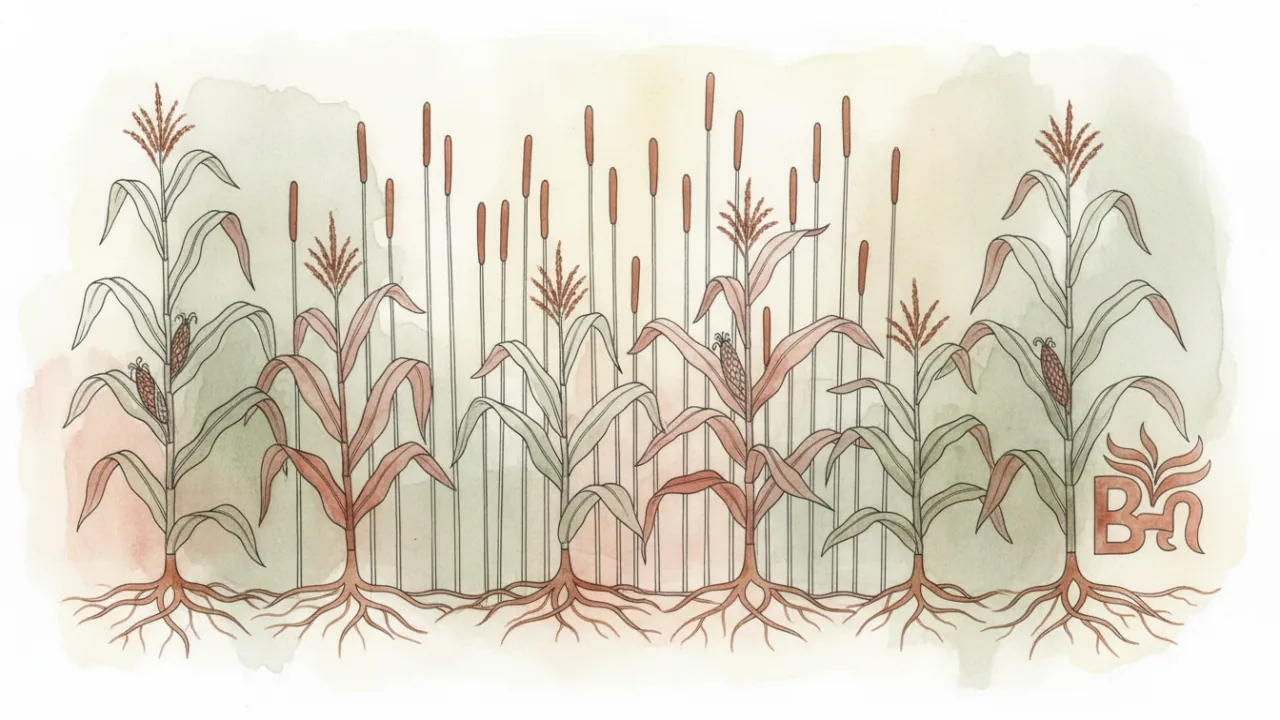
Watercolor scene evoking the energy of the Maya day sign B'en

Cosmology and origins

B'en sits in the thirteenth position of the tzolkin, and in classical Maya thought it is the nawal of the reed and the cornstalk — two slender plants that grow straight up out of the earth and refuse to lean. Carved on stelae and painted in the codices, B'en often appears as a vertical bundle, sometimes wrapped or tied, a visual shorthand for the pillar that holds a roof and the spine that holds a person.

The Maya did not abstract authority into a throne removed from the soil. The lords who carried B'en in their day-name were tied, ritually and agriculturally, to the milpa — the cornfield — and to the household compound. The standing reed and the cornstalk were not metaphors for power; they were the literal architecture of village life. A house was held up by reeds; a year was held up by corn.

What survives in the modern day-keepers' practice is this rooted understanding. B'en is not the energy of the conqueror or the orator. It is the energy of the post that does not move when the wind comes through, the stalk that bears its ear of corn without theatre. The cosmology is humble in its imagery and stubborn in its implications: real authority grows.

B'en as a birth-sign

To be born under B'en is to carry, from very young, a structural role you did not exactly choose. Children with this nawal are often the ones the family quietly relies on — the steady older sibling, the one the parents consult, the kid whose teachers say nice things about responsibility. Some of them love this. Some of them resent it. All of them carry it.

The signature trait is a back that other people lean against. B'en people tend to be uprightly loyal, principled in a slightly old-fashioned way, and reliably present in the rooms where presence matters — funerals, illnesses, the weeks after a friend's hard news. They are often the one who organizes, the one who shows up early to help set up chairs, the one who stays late to help clean.

The deeper inheritance is a particular relationship to dignity. B'en people often refuse to be small for the sake of social ease, and they refuse to make others small either. There is a vertical grace in this nawal that takes a lifetime to inhabit — not stiffness, not pride, but the simple fact of standing where you are.

The day-energy in practice

On a day governed by B'en, the room asks for posture. This is not a metaphor only — many day-keepers literally suggest beginning a B'en day by standing tall, breathing into the long line of the spine, and noticing where the body has been collapsing under recent weight. Decisions made from a collapsed posture tend to be small; decisions made from a vertical one tend to fit the situation.

The energy favors clean conversations about responsibility. If something has been getting away with vagueness — who is in charge of the project, who is hosting the holiday, who is paying for what — a B'en day is when those questions answer themselves with surprising ease. The nawal is not aggressive about it. It just stops accepting blur.

The shadow movement on a B'en day is rigidity disguised as principle. The same energy that lets you stand straight can let you stand stiff. The corrective is the cornstalk's own trick: roots deep enough that the stalk can sway in real wind without snapping. Be upright, not brittle.

Practices and tradecraft

Day-keepers and household elders work with B'en in concrete, almost domestic ways. Lighting a candle at the household altar, naming aloud who is under your roof and what you are responsible for, and tying a small knot in a cord for each commitment is a traditional practice — the knot is a tiny vertical bundle, a B'en in miniature. Untying knots that no longer correspond to real responsibilities is also part of the practice.

For modern practitioners the tradecraft translates well. Before a meeting, name to yourself the three things you are actually responsible for in the room and the things you are not. Sit or stand with a long spine. Speak in full, simple sentences. The B'en posture is contagious — rooms tend to organize themselves around the person who has clearly organized themselves first.

Physical practices that honor the nawal are vertical and rooted: walking with a level head, gardening upright crops, repairing the literal structure of your home. Tending a single tomato or corn plant from seed to harvest is, in the older sense, a year-long B'en devotion that teaches more about leadership than most leadership books.

Tradeoffs and shadow side

The shadow of B'en is the load that goes uncomplained-about until it becomes a kind of low-grade resentment. People with this nawal often carry without telling anyone they are carrying, and then notice, late, that no one has thought to ask. The work is learning that asking for help is also a B'en move — pillars in real Maya houses come in pairs and rows, never singly. A solitary post is not strength, it is a structural mistake.

The other shadow is righteousness. Once a B'en person decides what is principled, they can hold the line so firmly that they stop noticing they have lost contact with the actual people the principle was supposed to serve. Authority that can no longer be questioned has stopped being authority and started being a wall.

The corrective is rootedness, not laxity. A reed that has deep roots can bend without breaking and can be bent back without resentment. The shadow side of B'en heals when the person remembers they are a living plant, not a finished column — still growing, still able to give.

Trecena rhythms

A trecena that opens with B'en is one for taking your place. The first day sets the keynote: who am I responsible for, what am I the pillar of, where in my life am I being asked to stand up rather than sit out. The middle days of the trecena tend to test the answer — small situations arrive that require the upright response rather than the easy one.

By the seventh and eighth day the structural work tends to show. Households reorganize around new agreements; teams notice who has been carrying what; long-postponed conversations about leadership and responsibility find a way to happen without drama. This is the trecena's gift: it makes invisible structure visible.

The closing days reward those who held the line without becoming the line. If you arrive at the thirteenth day still able to bend in real wind, the B'en trecena has done its work. You will leave it standing slightly taller than you started, and the people around you will too — without anyone making a speech about it.

Frequently asked questions

  • What does B'en mean in the Maya calendar?

    B'en is the 13th day sign of the 260-day tzolkin. Its glyph reads as a reed or cornstalk — a slender vertical plant standing for the pillar of the household and the rooted authority that holds a family and a community together.

  • What is B'en called in K'iche' Maya?

    K'iche' day-keepers call this nawal Aj, meaning cane, cornstalk, or staff of authority. B'en is the Yucatec/academic name; Aj is the living highland name still used by Guatemalan day-keepers. They name the same energy.

  • What direction and color belong to B'en?

    B'en belongs to the East and the color red — the quadrant of sunrise, life force, and initiation. It shares this direction with Imix, Chikchan, Muluk, and Kab'an.

  • Why is B'en linked to leadership and the home?

    The reed mat (popol) was the literal seat of Maya rulers, and the cornstalk was the literal pillar of the household. From these two images comes B'en's archetype: authority that grows from being rooted, sovereignty as stewardship.