Day 4 of 20 in the tzolkin

K'an

lizard / seed

The seed remembers what it will become.

  • ripening
  • growth
  • embodiment
  • patience

K'an holds two images that the Maya let coexist: the seed under the soil and the lizard on the warm stone. Both know how to wait. Both know that the right moment is something the body senses before the mind can argue with it. The nawal is about ripening rather than racing.

People born under K'an often look quieter than they are. Inside, they're metabolizing — turning experience into something that, given time, becomes nourishing for the people around them. They make good craftspeople, gardeners, slow scholars; they are reliably underestimated by people who confuse softness with vagueness.

On a K'an day, things you planted weeks ago show their first leaf. It is not a day for forcing growth — pulling at a sprout doesn't help — but it is a wonderful day for tending: water, weed, witness.

The trecena that opens with K'an is fertile and grounded. Plant carefully, because what germinates here will keep growing.
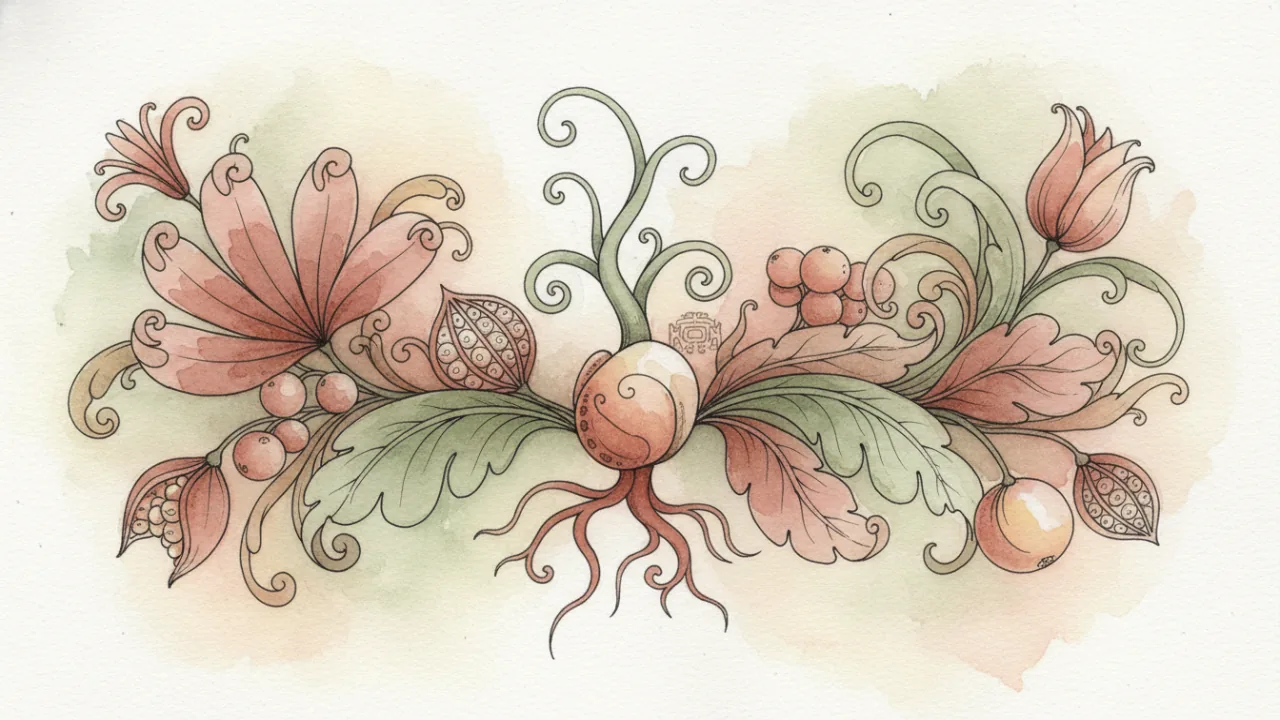
Watercolor scene evoking the energy of the Maya day sign K'an

Cosmology and origins of K'an

In the older Maya count, K'an sits in the fourth seat of the tzolkin — close to the beginning, but already past the first stirrings of waters, breath, and night. The day-keepers of the highlands placed it where the seed begins to remember itself: after Imix has held the formless waters, after Ik' has named the air, after Ak'b'al has held the inward dark. By the time the count reaches K'an, something planted in those earlier days is ready to begin the slow work of becoming.

The glyph carries two readings the daykeepers never split apart. One reads it as the maize-seed swelling underground, the other as the lizard sunning on a stone. Both readings are correct. Both are about the moment a body decides it is alive in the place where it was put. Some elders also tie K'an to the green and yellow ripeness of unripe maize — the colour of a field that is almost, but not quite, ready.

What makes K'an cosmologically distinctive is its refusal of urgency. Where other nawales push or pull the count forward, K'an thickens it. The count slows here, on purpose, so the rest of the trecena has something rooted to grow from.

K'an as a birth-sign

Children born on a K'an day are often described by Maya elders as having the patience of seed. They are not visibly hurried. Even as small children they tend to study a thing — a toy, an animal, a face — for longer than other children, and to come back to the same thing on different days as if checking on its growth. Parents sometimes worry they are slow; daykeepers gently correct them. They are not slow. They are ripening.

Adult K'an people often arrive at their gifts later than their peers, and then keep them longer. The friend who finally writes the book at forty-five, the cook whose flavours took twenty years to settle, the therapist who is suddenly very, very good — these are often K'an. Their authority is the kind that has been earned in private and is then offered without fuss.

Relationally, K'an people tend to commit by stages. They love by accumulation rather than declaration. A K'an partner who has been with you a decade is not the same person who arrived; they have been quietly composting the relationship into something richer the whole time. The mistake is reading their stillness as distance — usually it is the opposite.

K'an day-energy in practice

On a K'an day the field of attention runs slow and deep. Things you have been working on for weeks tend to show their first verifiable signs of life — a draft suddenly reads, a project lands its first quiet client, a friendship steps into a new key. The trick is to notice the new leaf without yanking on the stem.

The classical advice from highland daykeepers is that K'an days are for tending, not founding. It is a poor day to launch something brand new and a wonderful day to take care of what you have already begun. Watering, weeding, witnessing — three verbs that look small and aren't. Many practitioners use K'an days for the unglamorous middle of a project: the editing pass, the bug list, the second draft, the patient stitch.

Bodies tend to feel grounded on K'an days, sometimes heavily so. Sleep can run long; appetite can run honest. The energy rewards being in your body more than out of it, so cooking, gardening, walking, and bodywork all land especially well. Decisions made through the body during K'an tend to keep their shape.

Practices and tradecraft

Traditional K'an practice is agricultural in spirit even when there is no actual field. Daykeepers in places like Momostenango will use a K'an day to set seed-intentions: small, specific things that you intend to keep watering for months. Write them on a single piece of paper. Bury it under a houseplant. Come back on the next K'an, twenty days later, and see what has changed.

K'an is also the day to take inventory of what you are actually growing. Many traditions pair the day with a slow walk through your own commitments — projects, relationships, practices — asking quietly which ones are seedlings worth watering and which are weeds dressed up as seedlings. The nawal does not punish a clear no; it punishes pretending that everything in the bed is a flower.

For people working with the count personally, a useful K'an practice is the body-check: ten honest minutes asking the body what it knows about something the mind keeps re-arguing. The K'an answer is usually the right one. Write it down before the mind gets clever again.

Tradeoffs and shadow side

The shadow of K'an is the seed that never quite breaks ground. Patience can soften into postponement. The same person who can wait wisely for the right moment can also use waiting as a shield against ever being seen. K'an people sometimes nurse a brilliant idea so carefully that no one, including themselves, ever gets to taste the fruit.

There is also a quieter shadow: the K'an habit of underestimating its own ripeness. Because K'an grew slowly, it often assumes it still isn't ready. A K'an person can spend a decade past the point of readiness still apprenticing themselves to a craft they are already, by any honest measure, masters of. The work is letting other people's witnessing count.

And there is the brittleness that comes from being kept in the dark too long. A seed that never gets light eventually rots. K'an under stress can turn inward in a way that calcifies — risk-aversion hardening into paralysis, slowness into stubbornness. The remedy is not speed; it is one small, visible step into daylight, taken in the company of someone trusted.

Trecena rhythms opened by K'an

When K'an opens a trecena — a thirteen-day cycle in the tzolkin — the whole stretch takes on a fertile, grounded character. These are good thirteen days for planting things you genuinely intend to keep tending: a new practice, a new commitment, a new daily ritual. Whatever takes root in a K'an trecena tends to keep growing long after the cycle has closed.

The middle days of a K'an-led trecena often bring an unglamorous test: the first sign that what you planted will require more care than you planned for. Daykeepers say this is the cycle's way of asking whether you really meant it. The trecena does not punish a re-negotiation; it punishes neglect dressed up as faith.

By the closing days, what survived the middle is visibly stronger than it looked at the start. K'an trecenas tend to end in a particular kind of quiet satisfaction — not the high of a finished project, but the steadier feeling of something being unmistakably alive. Carry that feeling into the next cycle. It is the soil for everything that comes after.

Frequently asked questions

  • What does K'an mean in the Maya calendar?

    K'an is the 4th day sign of the 260-day tzolkin. In Yucatec it means yellow, ripe, precious; its symbols are the maize seed and the lizard. In K'iche' it is K'at, the net.

  • What direction and color belong to K'an?

    K'an belongs to the South and the color yellow — the cardinal seat of ripening, harvest, and fertility in Maya cosmology. Element: fire, the hearth that ripens the seed.

  • What is K'an's animal totem?

    The lizard (sometimes iguana or alligator), which sunbathes patiently on warm stones — an embodiment of slow knowing and bodily presence the day-keepers pair with the maize seed.

  • What is a K'an day good for?

    K'an days favor tending what you have already begun — watering projects, untying knots, asking for abundance, and second-draft work. Poor for brand-new launches.