Day 5 of 20 in the tzolkin

Chikchan

celestial serpent

Lightning in the spine. Old, alive, awake.

  • vital force
  • magnetism
  • intuition
  • awakening

Chikchan is the snake that travels between earth and sky — lightning made flesh, the energy that the older traditions everywhere tend to picture as a serpent. In the body it lives along the spine; in a room it shows up as charisma you can feel before anyone speaks.

Born under Chikchan, people tend to be physically present in a way others remember. They read rooms quickly, often before they can explain what they read, and they carry a charge that is equally easy to be drawn toward and to be wary of. The work of this nawal is learning to direct that current rather than be ridden by it.

On a Chikchan day, the body knows things. Trust the prickle on the back of your neck. Don't argue with a sudden no. Conversely, the day rewards courage — the nawal honors people who say the true thing while their voice is shaking.

Trecenas that begin with Chikchan tend to wake things up. Don't open them in a room you don't want shaken.
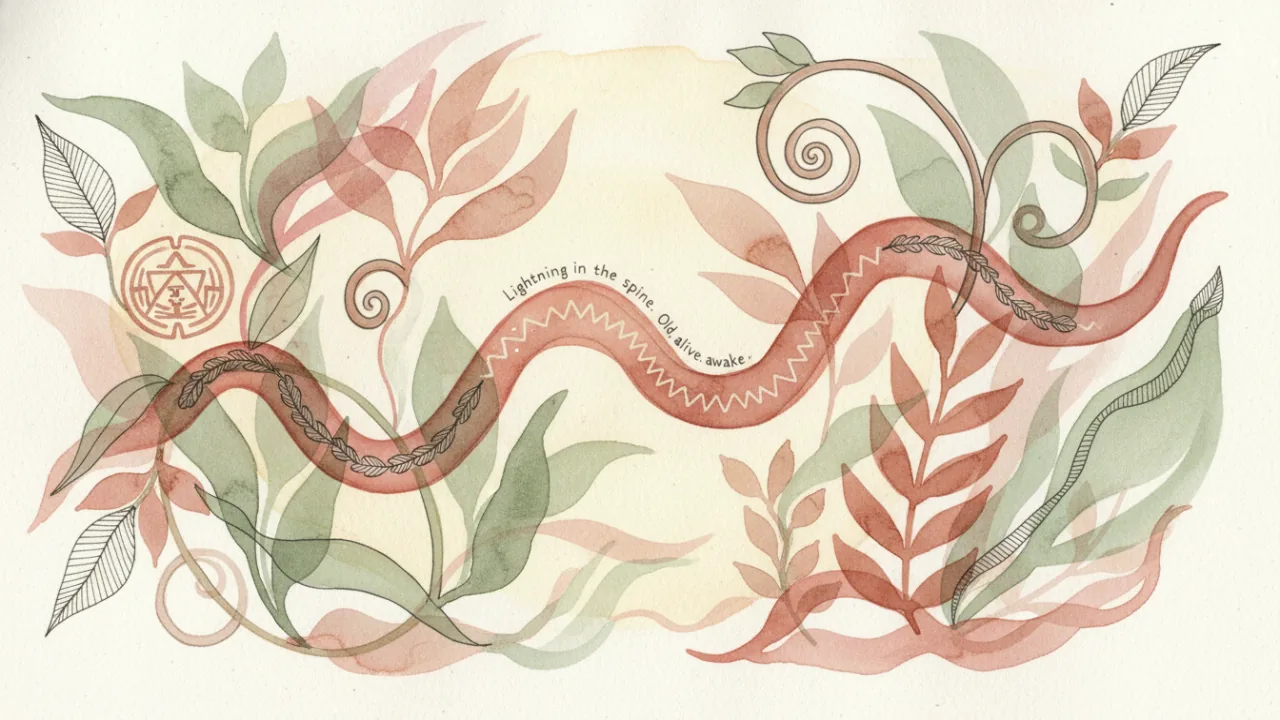
Watercolor scene evoking the energy of the Maya day sign Chikchan

Cosmology and origins

Long before Chikchan was a day-sign in any almanac, the serpent was already a structural figure in Mesoamerican thought. Carved on stelae, painted along temple stairways, coiled around the bodies of rulers in jade portraiture — the snake was the channel between the underworld waters, the surface of the earth, and the sky-band overhead. Chikchan inherits that architecture. To say a day belongs to Chikchan is to say the seam between worlds is, on this day, especially permeable.

The fifth nawal sits at a structural junction in the count. The first four signs sketch out the elemental ground — water, breath, night, seed — and Chikchan is what enters when those grounds are alive enough to hold something. The serpent is not added to the cosmos; the cosmos coming online produces a serpent. Older highland traditions describe this as the moment the world remembers how to move on its own.

Modern Maya day-keepers in places like Momostenango still treat Chikchan with a particular kind of respect. It is not feared, exactly, but it is not handled lightly. A trained ajq'ij will tell you the day is ideal for petitions involving vitality, potency, and the unblocking of stuck life-force, and that it asks the petitioner to come prepared.

As a birth-sign

People born on Chikchan often discover, somewhere in their twenties, that the room responds to them before they have done anything to ask it to. This is not a metaphor about social skills. It is a description of charge — the simple fact that a Chikchan body tends to carry more electrical presence than the average, and that other bodies register it whether they know they are registering it or not.

The lifelong task of a Chikchan birth is learning that this presence is a responsibility before it is a gift. Used carelessly, it overwhelms — friends feel both magnetized and obscurely worn out, partners report a kind of weather inside the relationship that they cannot quite name. Used consciously, the same charge becomes the steady warmth of someone who is fully here, fully met, and not draining the room to feel themselves.

There is also, often, an unusual physical instinct. Chikchan-born people frequently know what is wrong with a room, a body, or a situation before any rational evidence arrives. Many find their way to bodywork, healing arts, performance, or any craft where the nervous system is the primary instrument. The shadow of all this is described below, but the gift is real and worth honoring.

Day-energy in practice

On a Chikchan day, the body is a more reliable instrument than usual. The recommendation from older calendar-keepers is simple: do not override the somatic data. If your stomach knots before a meeting, take that seriously. If a stranger feels wrong before you can articulate why, give yourself permission to step back. The day amplifies signal that the rational mind would, on a different day, talk you out of.

The flip side is that the day also amplifies courage that has been rehearsing itself in private. Conversations that have been waiting for the right moment often find it on Chikchan. A request that felt impossible to voice can land cleanly. The nawal favors people who say the true thing without performing it — quietly, with the voice they actually have, even if it shakes.

Practical advice from working day-keepers: drink water, eat real food, and avoid making large decisions while exhausted. Chikchan is generous with energy but unforgiving of bodies that are running on fumes. Sleep on anything that does not need an answer today.

Practices and tradecraft

Highland Maya practitioners often mark Chikchan days with offerings that involve copal, candles in pairs, and petitions made standing rather than seated — the spine is part of the prayer. Lighting a candle for a Chikchan intention is, in this lineage, a literal act: the flame stands in for the vital current the day moves with, and the candle's behavior (steady, smoking, flickering) is read as response.

For people without access to a traditional ajq'ij, simpler practices carry the same logic. A short walk before a difficult conversation lets the spine align with what it is about to say. A few minutes of slow breathing into the lower back grounds the charge so it does not leak as anxiety. Many practitioners recommend ending a Chikchan day with hands on the floor — literally returning the borrowed current to the earth before sleep.

Crafts that suit Chikchan energy are those that route nervous-system intelligence into something useful: massage, acupuncture, dance, martial arts, voice work, certain kinds of teaching. The trade is the same in each case — taking a current that wants to move and giving it a clean path through which to do it.

Tradeoffs and shadow side

The shadow of Chikchan is not, as outsiders sometimes assume, a kind of theatrical danger. It is more ordinary and more chronic: an inability to be still. The same charge that makes a Chikchan body magnetic can, untended, make it restless to the point of self-harm. Sleep gets thin. Substances start to look like regulation tools. Relationships are entered for the spark and exited when the spark settles into ordinary warmth.

There is also a particular vulnerability to other people's projections. A Chikchan presence draws attention, and attention is not always loving. Some carriers of this nawal spend a long stretch of their lives mistaking other people's fascination for their own value, and learn, often the hard way, that the charge is not the self.

The standard older-practitioner counsel for the Chikchan shadow is unromantic: cultivate boring days. Anchor in routine. Choose at least one daily practice that is not glamorous and is not optional. The serpent rests well in a clean, ordered, well-tended container. It does poorly in a body that is constantly chasing its own voltage.

Trecena rhythms

A trecena that opens with Chikchan tends to wake things up across all thirteen days. What was sleeping becomes vivid. What was numb begins to register again. Old grievances that have been patiently buried sometimes surface in the first three or four days and ask to be addressed. This is not a misfortune; it is the rhythm of a Chikchan trecena doing what it does.

Day-keepers often advise treating the first half of a Chikchan trecena as a period of careful noticing rather than action. By around the seventh or eighth day, the energy has matured, and decisions made then tend to stick. The closing days favor integration — slowing the pace, eating well, returning the borrowed charge so the next trecena can begin in clear ground.

If you are choosing when to open something — a project, a relationship, a difficult conversation — a Chikchan trecena will give you reach and force, but it will not let you keep secrets from yourself. Open it knowing that. The reward, when you do, is a stretch of days in which honesty is unusually possible.

Frequently asked questions

  • What does Chikchan mean in the Maya calendar?

    Chikchan is the 5th of 20 day signs. Yucatec means serpent; K'iche' day-keepers call it Kan. It carries koyopa — inner lightning, the vital force older traditions elsewhere call kundalini.

  • What direction and color belong to Chikchan?

    Chikchan sits in the East with the color red — sunrise, initiation, and life force. It shares this quadrant with Imix, Muluk, B'en, and Kab'an, the five East·Red signs of the tzolkin.

  • Is Chikchan related to Kukulkan or Quetzalcoatl?

    Yes — they share the feathered-serpent family. Kukulkan (Yucatec), Q'uq'umatz (K'iche'), and Quetzalcoatl (Nahua) all name the celestial serpent. Chikchan carries that current at the daily, embodied scale.

  • What are people born on Chikchan like?

    Charismatic, physically present, intuitive in a somatic way — they often read a room before they can explain why. Strengths: magnetism, courage, healing instinct. Shadow: restlessness and extremes.