Day 9 of 20 in the tzolkin

Muluk

water / jade

Still water. The kind you can see down into.

  • emotion
  • depth
  • memory
  • polish

Muluk is water collected — the cenote, the offering bowl, the rain saved in jade. It's the emotional realm not as a passing weather front but as a substance you can carry, return to, scry into. The nawal honors feelings as containers of information rather than disturbances to be managed.

People born under Muluk often have unusually long memories for emotional textures: how a room felt, what someone meant under what they said, the year a friendship changed key. They are the people you call when something feels off and you can't quite say why.

On a Muluk day, the emotional channel runs strong. Tears arrive without warning and aren't a problem. Conversations go deeper than planned. The nawal rewards honesty about what's actually being felt, even when it's inconvenient.

A trecena opened by Muluk is reflective, sometimes tender. Drink water; this stretch asks the body to hold more than usual.
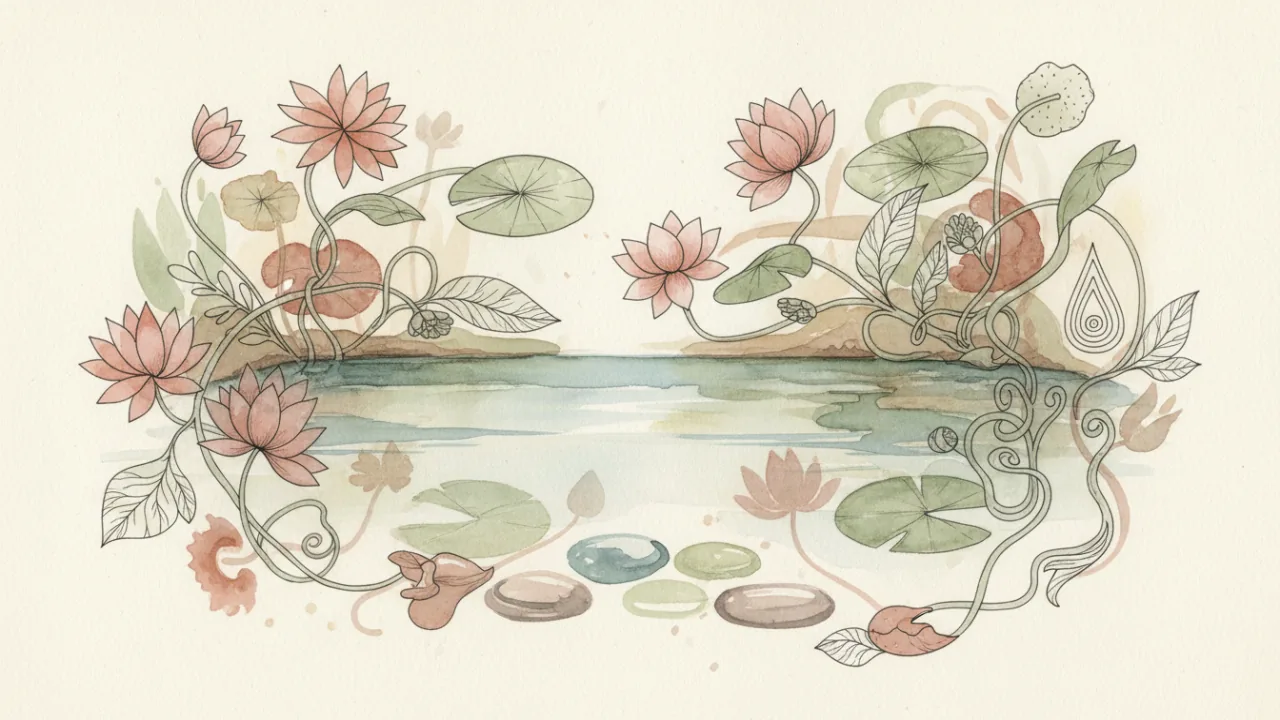
Watercolor scene evoking the energy of the Maya day sign Muluk

Cosmology and origins

Muluk arrives ninth in the count, and the position is not accidental. The early signs sketch the world into being — primordial water, breath, night, seed — and Muluk returns to water once it has been gathered. This is not the open ocean of Imix; this is the cenote, the deep limestone well that the Maya treated as a literal mouth into the underworld and a literal source of drinking water at the same time. Two truths, one bowl.

The glyph is often read as the round shape of an offering vessel, sometimes with a circular drop suspended at its centre — a single bead of jade, a single tear, a single act of remembering. Jade is the key here. For the lowland Maya jade was more precious than gold: green, cool, polished slowly, associated with rain, breath, and the soul itself. Muluk's water is jade-water — substance refined until it can hold light.

Stone-carvers, day-keepers, and the women who tended the cenote shrines all worked under this nawal's logic. Water that had been collected, blessed, and kept was different from water in the river. Muluk asks the same question of feeling: what changes when you stop letting it pass through and start letting it settle?

As a birth-sign

Children born under Muluk often arrive looking watchful. Family members will say, of a Muluk infant, that the baby seemed to know things — to register the temperature of the room, the unspoken argument under dinner, the visitor who didn't really want to be there. That doesn't fade. The adult Muluk keeps an unusually long emotional memory and tends to file experience by feel rather than by date.

There is craft in this nawal. Muluk people are not simply sensitive; they are good at sensitivity, the way a potter is good at clay. They notice what a relationship needs years before it asks. They remember the exact sentence that hurt — and the exact sentence that healed it. In friendships and family they are often the quiet structural beam that no one names because no one has had to live without it.

The cost is real. A nervous system this porous needs maintenance, and many Muluk people learn the hard way that they cannot pour from an empty cenote. The maturity of this birth-sign is learning to refill on purpose — sleep, water, solitude, the company of one or two people who don't extract — rather than running until the bowl rings dry.

Day-energy in practice

On a Muluk day, the emotional volume in a room goes up by roughly one notch. People cry at the meeting that wasn't supposed to be emotional. Old griefs surface in the middle of the grocery run. A song you haven't heard in fifteen years comes on and finishes the job. None of this is a malfunction; it's the nawal doing its job, lifting what has been settling at the bottom of the bowl up to where the light reaches.

The day rewards anyone willing to be honest about what is actually being felt. It is not a day for performing fine. Conversations that begin with the sentence 'this is harder than I've been letting on' tend to go somewhere useful in this energy, and tend to go nowhere at all in a brisker week.

It is also a day for water in the literal sense. Drink more than you think you need. Take the bath. Walk to the river or the sea or the kitchen sink and run your hands under the tap for a minute. Muluk and the body are old friends; the body keeps the appointment when the mind forgets.

Practices and tradecraft

The classic Muluk practice is the offering bowl. Not necessarily anything elaborate: a small dish, clear water, a pinch of salt or copal or a single flower, set somewhere quiet and changed every few days. The bowl is a way of telling the room — and yourself — that feeling is being received here, not banished. Day-keepers in highland Guatemala still pour water in this nawal's count.

Journaling under Muluk works best when it is descriptive rather than analytical. Write what the feeling looked like, where it sat in the body, what it reminded you of, what colour it was. Conclusions can wait. The point is to give the feeling a shape that holds water, so to speak — so that you can come back to it instead of having to feel it from scratch every time.

For ceremony, Muluk pairs naturally with anything involving washing: hands, feet, faces, doorways, stones from a meaningful place. A short rinsing ritual at the beginning of a difficult conversation does something the modern week has mostly forgotten. The nawal does not require belief; it requires presence and clean water.

Tradeoffs and shadow side

The shadow of Muluk is the bowl that has been held too long without emptying. Feeling that was meant to inform becomes feeling that defines, and the depth that was a gift becomes a place to disappear into. Muluk people, badly tended, can drown in their own interior — rehearsing old hurts, scrying for meanings that are not there, mistaking the mood for the truth.

There is also a quieter shadow: emotional connoisseurship. When a person becomes very good at feeling, it can be tempting to treat other people's lives as material for one's own deepening — to be moved by a friend's grief without actually helping, to collect emotional textures the way one collects records. The nawal asks more than that. The bowl is for offering, not for hoarding.

The corrective is not to feel less. Muluk doesn't run drier on command, and the attempt usually backfires. The corrective is to keep the water moving — to express, to share, to change the bowl. Feeling expressed is different from feeling merely accumulated, and the nawal is a teacher of that difference.

Trecena rhythms

When Muluk opens a thirteen-day count, the whole stretch tilts reflective. The first few days are often unexpectedly tender — old correspondence resurfaces, dreams get vivid, people you haven't thought about in a year send a message at three in the afternoon. This is the cenote rising. Don't fight it; line a few quiet evenings up and let it.

The middle of a Muluk trecena is good for honest conversations and bad for big public launches. Anything that requires you to be performatively up will feel hollow; anything that requires you to be present to another person will feel deeply alive. Use the energy on the relationships and the inner work, not on the press release.

Toward the end of the trecena the water often clears. Whatever was murky settles, and a decision that had felt impossible at the start of the count becomes obvious — not because the situation changed, but because you have. Muluk does not give you new facts; it gives you back the ones you already had, polished.

Frequently asked questions

  • What does Muluk mean in Maya astrology?

    Muluk is the ninth Maya day sign, meaning water or offering. In K'iche' it is Toj, payment. Its glyph is an offering bowl with a jade drop — emotion held still long enough to settle, and debts honored.

  • What direction and color belong to Muluk?

    Muluk sits in the East and carries the color red — the quadrant of sunrise, life force, and initiation. Its East-direction siblings are Imix, Chikchan, B'en, and Kab'an.

  • Who is Chaak and how is he linked to Muluk?

    Chaak is the Maya god of rain, thunder, and lightning, who strikes the clouds with his axe to release the rains. He is Muluk's patron. Chaak has four directional aspects, each in a cardinal color.

  • Is Muluk the same as Toj?

    Yes. Muluk is the Yucatec/academic name; Toj is the K'iche' name still used by living day-keepers. Toj emphasizes payment, debt, and the Sacred Fire ceremony; Muluk emphasizes water, jade, and the offering bowl. Same nawal.